Albany’s Courthouse Site: A Quiet Stop in Albany, Oregon’s Spiritualist History
A historic stop hiding in plain sight
Most visitors come to downtown Albany for the handsome brick storefronts, the slow pleasure of a walkable historic core, and that rare feeling that the nineteenth century never entirely packed up and left. The courthouse site adds a quieter kind of intrigue. On Oct. 9, 1869, The Albany Register reported that “Mr. Todd, the great spiritualist” had been lecturing at the Court House “during the week.” It is a tiny newspaper item, almost casual in tone, but it anchors one of the clearest documented moments of Spiritualist history in Albany.
That small notice matters because it places an alternative spiritual current not out on the margins, but right in the middle of civic life. Albany’s courthouse was not merely a place for official business; for at least one week in 1869, it also became a platform for ideas that touched the era’s curiosity about the unseen, the afterlife, and the boundaries of ordinary belief.
Where the lecture likely happened
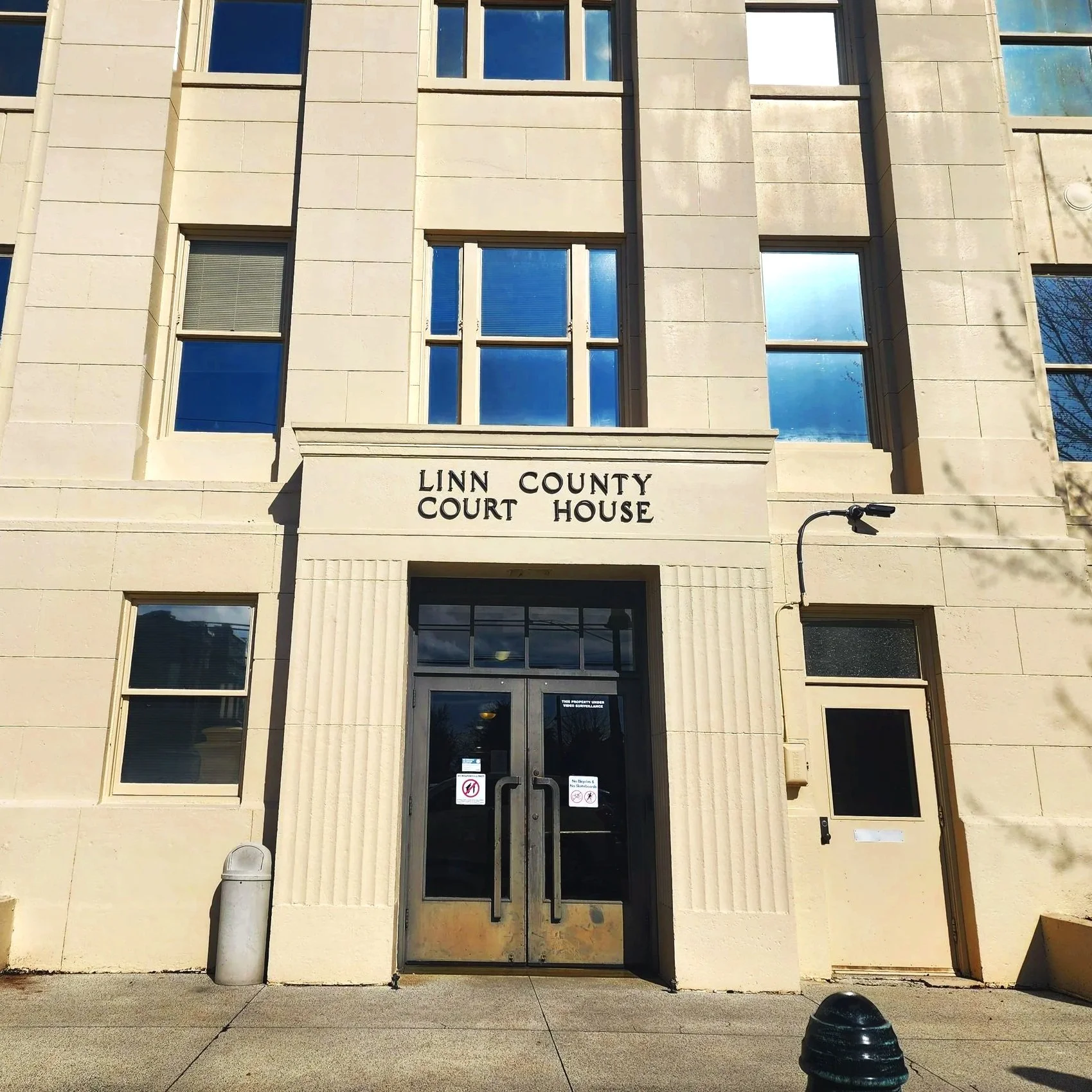
The courthouse that hosted that lecture is not the building visitors see today. Albany Regional Museum’s history of the site says Albany’s first courthouse was built in 1853, burned in 1861, and was replaced by a two-story masonry courthouse completed in 1865 on the west side of the property that now contains the present courthouse. The Oregon Judicial Department says today’s Linn County Courthouse at 300 SW Fourth Avenue was built in 1940 adjacent to those earlier courthouses. Read together, those records strongly suggest that anyone standing at the courthouse block today is standing on or immediately beside the ground where that 1869 Spiritualist lecture likely took place.
That is part of the appeal. This is not a site where everything has been frozen behind velvet ropes. It is a living civic space layered over older foundations, the kind of place where history survives not because it has been perfectly preserved, but because the street grid, the public square, and the memory of the town still hold onto it.
Why it belongs on a heritage itinerary
Downtown Albany is especially good at this kind of discovery. Travel Oregon describes Historic Downtown Albany as the city’s civic, commercial, and social center, where many buildings seen in old photographs still survive. The Albany Downtown Association invites visitors to stroll a National Register district rich with historic architecture, shops, food, and stories. That makes the courthouse site more than a historical footnote. It becomes a natural stop on a broader walk through the city’s layered past.
And there is something wonderfully restrained about the story. It does not need invented séances, gothic exaggeration, or modern paranormal drama to feel memorable. The surviving record does not show a long-running courthouse occult society, and it does not prove ritual use of the space. What it does show is better, and more trustworthy: Albany residents once gathered here to hear a lecturer publicly identified as a Spiritualist. That alone tells us the town was curious, connected, and open enough to host uncommon ideas in a very public room.
How to experience the site today
The best way to visit is slowly. Start at the current Linn County Courthouse and take in the block as a place of continuity rather than exact reconstruction. Then keep exploring downtown on foot. For context, fold in a visit to the Albany Regional Museum at 136 Lyon Street Southwest, also in downtown Albany. Travel Oregon presents the museum as a starting point for exploring Historic Albany, and the museum’s own contact page confirms its downtown location. Put those together with a relaxed stroll through the surrounding district, and the courthouse story begins to feel less like a curiosity and more like a doorway into Albany’s overlooked spiritual history.
Albany does not need to shout this story to make it compelling. Its power lies in the opposite: one modest newspaper notice, one courthouse block with deep civic memory, and one downtown that still rewards careful looking. For travelers who like their history textured, local, and a little unexpected, this is one of the city’s most satisfying stops.